

Organic Silicon vs. Traditional Silicones: Understanding the Difference in Modern Aesthetic Cosmetics
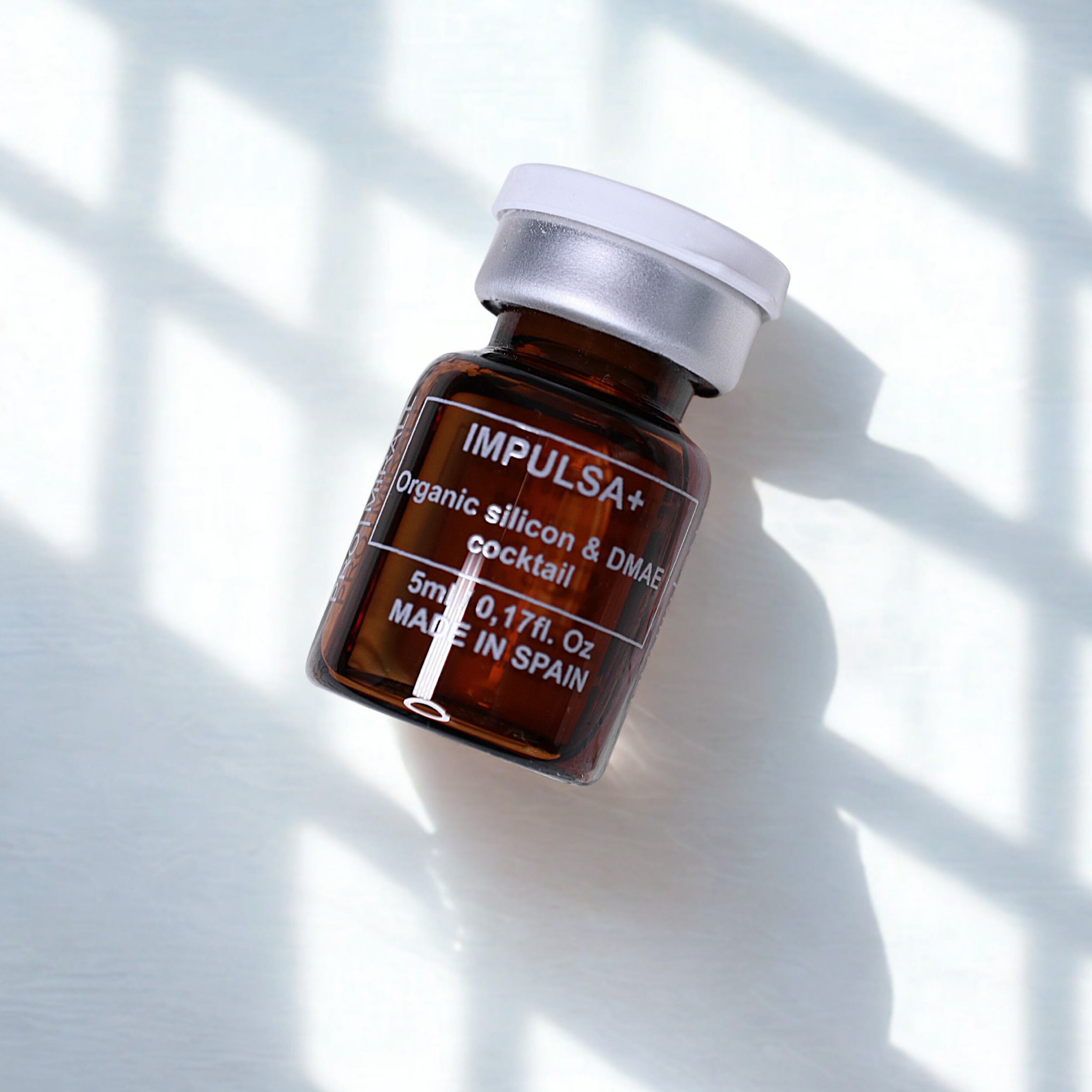
DMAE Promirall
The word “silicone” often creates confusion in aesthetic practice. However, not all forms of silicon used in skin-related applications are the same — especially when comparing inorganic silicones with organic silicon used in advanced cosmetic formulations.
Understanding this difference is key when selecting professional skin-firming and restructuring solutions.
Inorganic Silicone: A Structural Material, Not a Metabolic One
Inorganic silicones, such as polydimethylsiloxane and related polymers, are synthetic materials known for their stability. However:
They are non-resorbable
They do not integrate into skin metabolism
They may migrate within tissues
Long-term complications may include fibrosis, granulomas, or chronic inflammation
In some cases, correction can be difficult or impossible
These materials act more as structural fillers than as biological supporters of skin quality.
Organic Silicon: A Physiological Skin Supporter
In contrast, Organic Silicon (Silicium Organic) works at a completely different level.
It is composed of silicon bound to organic radicals, making it biocompatible and metabolically active.
In cosmetic skin-restructuring protocols, Organic Silicon helps:
✔️ Support fibroblast activity
✔️ Improve dermal matrix organization
✔️ Enhance skin turgor and density appearance
✔️ Optimize the performance of other actives (hyaluronic acid, vitamins, peptides)
✔️ Contribute to overall skin quality and firmness
Unlike inert materials, Organic Silicon acts as a biorevitalizing and remodeling-supporting component, without accumulation or migration.
Organic Silicon vs. Biostimulator Implants
It is also important to distinguish Organic Silicon from materials such as PLLA (Poly-L-Lactic Acid).
PLLA works primarily as a biostimulator-implant, influencing volume and structural architecture.
Organic Silicon, on the other hand, functions as a metabolic and supportive element, focused on tissue quality, not volume.
These are different approaches with different objectives.
The PROMIRALL Perspective – IMPULSA+
IMPULSA+ by PROMIRALL combines DMAE and Organic Silicon in a professional cosmetic formulation designed for topical aesthetic protocols.
This synergy supports:
Improved appearance of skin firmness
Better-looking elasticity and tone
Support of the skin’s structural environment
All PROMIRALL products are:
🧴 Supplied in sterile, single-dose vials
🔬 Supported by full laboratory testing and certification
📋 Fully aligned with EU cosmetic regulation
The Future of Firming Is About Skin Quality
Modern aesthetic cosmetics are moving from simply “filling” to supporting skin biology.
Organic Silicon represents this new generation approach: physiological, supportive, and focused on long-term skin quality.
And this is precisely the philosophy behind IMPULSA+.
📌 For professional use. Cosmetic product for topical application.
